


I remember the first time I tried making this yeast bread with bread flour—it was one of those lazy Saturday mornings when I wasn’t quite sure what to expect. The warm, yeasty scent filled the kitchen, wrapping around me like a cozy blanket. I was half distracted by the morning light slipping through the window and the sound of the neighborhood waking up outside. Kneading that dough was oddly satisfying, even though I wasn’t exactly sure if I was doing it right—sometimes it stuck a bit, and I might have added a little too much flour. But watching it rise, almost doubling in size, felt like a small miracle happening right before my eyes. When the crust finally browned in the oven, I couldn’t wait to tear into it. The crumb was soft, just with the right chew, and the smell lingered long after the last slice was gone.
- It’s simple — and that’s kind of the point. No fancy ingredients, just basic pantry staples coming together beautifully.
- The texture strikes a nice balance: crispy crust on the outside, tender crumb inside that holds up well for sandwiches or toast.
- It takes some patience, with two rises, so it’s not exactly a quick fix, but that slow process makes the flavor so worth it.
- Perfect for customizing if you want to add seeds or herbs, though I usually keep it classic to appreciate the pure bread flavor.
If you’re a bit nervous about working with yeast, don’t worry. It’s more forgiving than it seems, and you’ll get a feel for the dough as you go. Plus, this loaf freezes well if you want to make it ahead and enjoy it later, which I often do because life gets busy.
PrintClassic Yeast Bread with Bread Flour
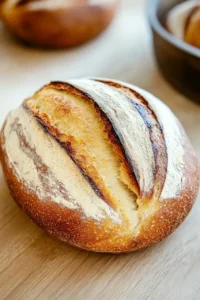
A simple and delicious homemade yeast bread made with bread flour, perfect for sandwiches, toast, or enjoying fresh from the oven.
- Prep Time: 15 minutes
- Cook Time: 30 minutes
- Total Time: 1 hour 45 minutes
- Yield: 12 slices 1x
Ingredients
3 1/2 cups bread flour, plus extra for kneading
1 packet (2 1/4 teaspoons) active dry yeast
1 1/4 cups warm water (110°F/43°C)
2 tablespoons granulated sugar
1 teaspoon salt
2 tablespoons unsalted butter, melted
Instructions
In a small bowl, dissolve the sugar in the warm water.
Sprinkle the active dry yeast over the water and let it sit for 5 to 10 minutes until foamy.
In a large mixing bowl, combine the bread flour and salt.
Make a well in the center of the flour mixture and pour in the yeast mixture and melted butter.
Stir with a wooden spoon or dough hook until the dough begins to come together.
Turn the dough out onto a floured surface and knead for about 8 to 10 minutes until smooth and elastic, adding more flour as needed to prevent sticking.
Place the dough in a lightly greased bowl, cover with a clean kitchen towel or plastic wrap, and let it rise in a warm place for 1 hour or until doubled in size.
Punch down the dough to release air bubbles and shape it into a loaf.
Place the shaped dough into a greased 9×5-inch loaf pan.
Cover the loaf pan with a towel and let the dough rise again for 30 to 45 minutes until it has risen about 1 inch above the rim of the pan.
Preheat the oven to 375°F (190°C).
Bake the bread for 25 to 30 minutes until the crust is golden brown and the loaf sounds hollow when tapped.
Remove the bread from the oven and let it cool in the pan for 10 minutes.
Transfer the bread to a wire rack to cool completely before slicing.
Once you’ve got the basics down, it’s easy to rely on just a few kitchen tools—nothing fancy needed, just a sturdy bowl and a loaf pan. I like serving this bread fresh with butter and a drizzle of honey, or alongside a hearty soup. Sometimes I try mixing in whole wheat flour for a denser texture, or sprinkling oats on top before baking for a rustic touch. Other times, I haven’t tested adding a bit of garlic or rosemary, but I imagine that would be delicious too.
FAQ
Can I use all-purpose flour instead of bread flour? You can, but the loaf might turn out less chewy and a bit denser since bread flour has a higher protein content.
What’s the best way to store leftover bread? Keep it in an airtight container at room temperature for a few days, or freeze slices wrapped tightly to preserve freshness.
How do I know if the yeast is still good? If it foams and bubbles when mixed with warm water and sugar, it’s active and ready to use.
Ready to turn your kitchen into a cozy bakery? Give this yeast bread with bread flour a try and see how a simple loaf can brighten your day.